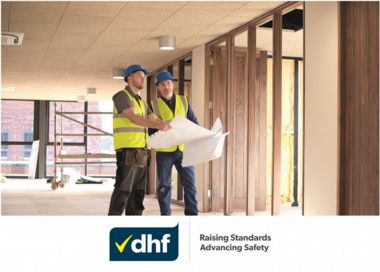
Nine years on from the Grenfell Tower fire, the construction industry has undergone significant and necessary change. At the forefront of this transformation is a renewed and uncompromising focus on competence.
The introduction of competency frameworks across the construction sector represents one of the most important developments in recent decades. These frameworks are not simply guidance, they form the ‘benchmark that anyone contributing to the construction of a building must meet as a minimum standard’. And that is undeniably a positive step forward for safety, accountability, and professionalism. There has been the introduction of stricter competence standards across the industry and new roles like:
Along with greater scrutiny of building control bodies (including private inspectors)
The Construction Products Association (CPA), through its Construction Products Reform agenda and competence white paper, featuring the new British Standard BS 8670-2, sets out a clear vision for the future. It challenges every sector within construction to ask a critical question: Is the industry ready?
For over one hundred years, the Door & Hardware Federation (DHF), formed from the Association of Builders’ Hardware Manufacturers (ABHM), has supported the building hardware industry by providing guidance on standards and legislation.
Members have historically responded positively; adapting products, improving compliance, and aligning with evolving regulatory requirements.
However, the landscape in 2026 is fundamentally different.
It is no longer enough for products alone to comply. Now, the ‘people behind those products’ - those who manufacture, specify, sell, advise, promote, and install, must also demonstrate that they are ‘competent’.
Competence frameworks are built around four key pillars:
Or SKEB as it’s known. Together, these elements define what it means to be competent in a role. However, while skills, knowledge, and experience can often be measured or evidenced, behaviours present a greater challenge. They are less tangible, harder to quantify, and more difficult to standardise across an industry.
This raises an important issue. How can individuals and organisations clearly demonstrate competence in a consistent and recognisable way?
This is where structured, accredited training becomes essential. Recognising the need for a robust and measurable approach, DHF has developed a comprehensive training programme designed specifically for the building hardware manufacturing sector. Its purpose is clear:
To provide a trusted, verifiable benchmark of knowledge within the SKEB framework, strengthening skills and experience and actively driving better behaviours.
At its core is a mandatory programme comprising six key units:
These foundational topics ensure that all learners develop a consistent and essential understanding of the industry.
Learners then build on this knowledge through a choice of twelve product-specific modules, tailored to their role and area of expertise, including locks, hinges, access control, seals, and more.
This structure reflects a key principle. Training must be relevant, role-specific, and meaningful.
Crucially, this is not informal or unverified learning. The DHF programme is a recognised Level 2 qualification that is:
For the first time, the building hardware industry has access to an official, regulated qualification that employers can trust and recognise.
This provides a clear and consistent way to demonstrate that individuals meet the knowledge expectations outlined in the CPA white paper.
While no single programme can evidence every element of SKEB, particularly behaviours, this training represents a critical step forward.
It enables organisations to:
And for individuals, it offers:
The direction of travel is clear. Competence is now a fundamental requirement across the construction sector, not just in products, but in people.
The CPA’s reform agenda sets the benchmark. The responsibility now lies with each sector to respond.
For the building hardware industry, the question is no longer if change is needed, but how quickly it can adapt.
Through its accredited training programme, DHF is helping the industry take a decisive step forward ensuring that when it comes to competence, organisations can confidently say…
“We are ready”

Join dhf
Enjoy the full benefits of dhf membership
Apply today